
Discovering the Science Behind Biobehavioral Health Research
The UNC Biobehavioral Lab (BBL) invites students, researchers, faculty, and community members to explore how innovative laboratory technologies can help researchers better understand the complex relationships among behavior, stress, physiology, and health.
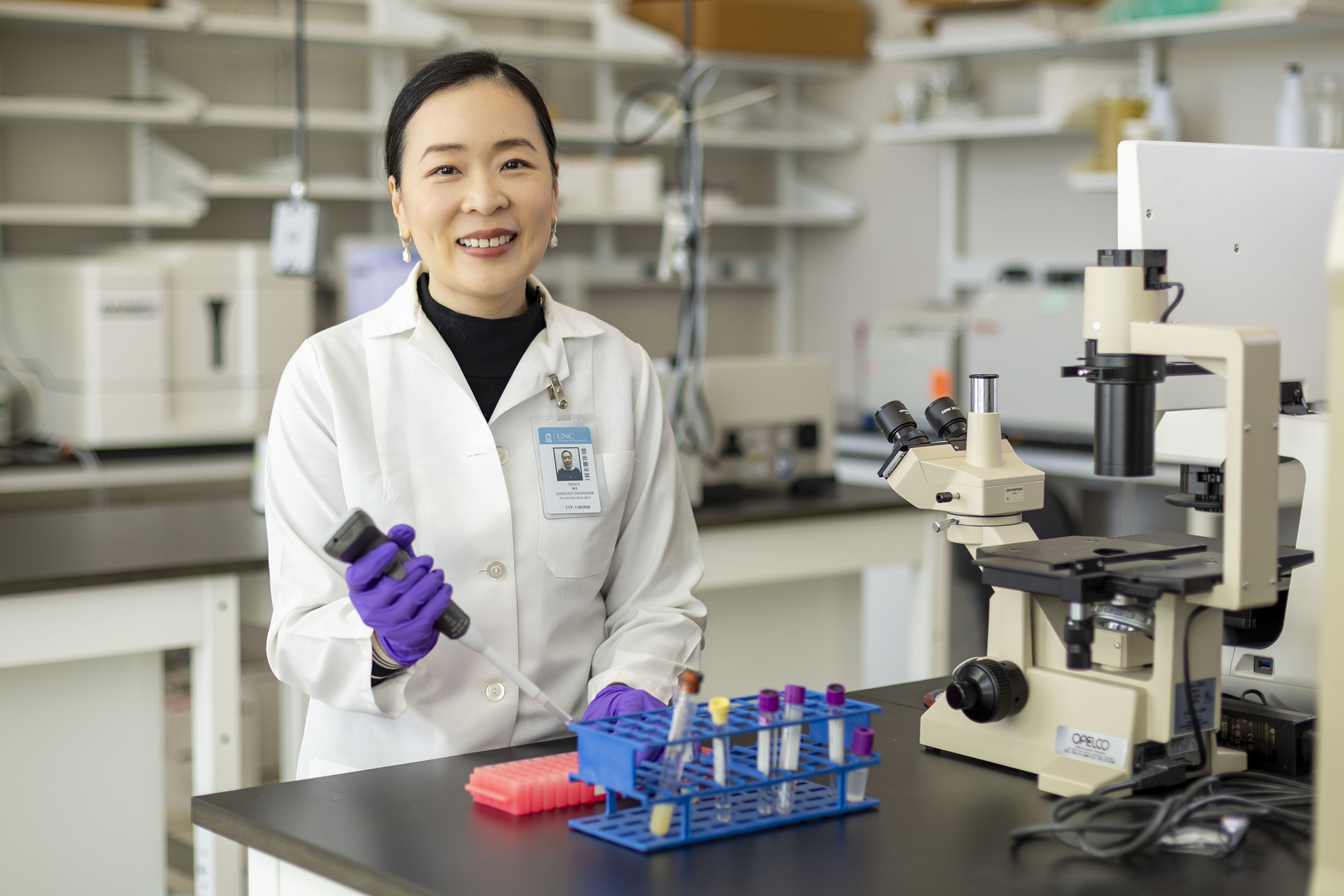
The UNC Biobehavioral Lab was established to provide a shared research environment where investigators can integrate behavioral, physiological, and biological measurements to advance health research. Under the leadership of Dr. Grace Wu, the BBL has expanded its capabilities to support both laboratory- and field-based research across a variety of populations and health conditions.
What Visitors Will See
Visitors will learn how biological samples can be collected, processed, stored, and analyzed, as well as how digital-based physiological and behavioral measurements can be collected in controlled laboratory environments and in participants’ everyday lives. The tour will also highlight how the BBL uses minimally invasive technologies to collect biomarker and physiological data. These measurements can be integrated with field-based behavioral and health data, providing researchers with a more complete picture of the factors that influence health and well-being.
Demonstrations and Research Technologies
The Open Lab Tour will include demonstrations of several technologies used in biobehavioral research.
Hair and Nail Sample Processing
Visitors will learn about the use of biological samples such as hair and nails in health research. The Mixer Mill MM400 will be demonstrated as an example of laboratory equipment used to process and homogenize solid biological samples into a powder that can be further analyzed for biological markers. This approach allows researchers to explore biological information contained within minimally invasive specimens and may be particularly useful for studies examining longer-term physiological or environmental exposures.
Multiplex Biomarker Analysis
The tour will introduce visitors to two platforms used for multiplex biomarker analysis: the Meso Scale Discovery (MSD) platform and the Luminex platform. Using dried blood spots and other biological specimens such as tears and urine, these technologies allow researchers to measure multiple protein-based biomarkers from a single sample with low concertation of target markers.
Exploring Biological Samples Under the Microscope
Visitors will also see biological samples under a microscope. A demonstration will include viewing cancer cells under the microscope, providing visitors with a close-up look at cellular structures and illustrating how researchers can examine biological changes at the cellular level.
Field- and Home-Based Research Equipment
A major focus of the BBL is bringing research beyond the traditional laboratory. Visitors will see examples of equipment that researchers can use to collect health data in participants’ homes and everyday environments.
- Demonstrations will include:
- ActiGraph wearable devices and software, which collect and analyze activity and sleep data from a participant’s wrist. These devices allow researchers to objectively monitor physical activity, sedentary behavior, and sleep patterns in participants’ everyday environments.
- Handheld and portable electrocardiography (ECG) devices. Visitors will see how these devices can capture real-time cardiac electrical activity in a convenient and minimally invasive manner. Portable ECG technologies can be particularly valuable for field-based and home-based research.
- WatchPAT ONE, a portable home sleep-apnea testing device that allows researchers to assess sleep-related physiological measures in participants’ home environments.
- Toss-Caterpillar whole blood collection methods, which provide a convenient approach for collecting small blood samples from arms for biomarker research.
- Point-of-care HbA1c testing equipment, which can provide information about long-term blood glucose control.
- Point-of-care lipid and glucose testing equipment, allowing researchers to obtain metabolic measurements efficiently during home visits or in field settings.
BodPod Body Composition Assessment
Visitors will also see the BodPod, a noninvasive system used to assess body composition through air-displacement technology. Unlike methods that require extensive physical measurements or invasive procedures, the BodPod uses changes in air pressure to estimate body composition. This technology allows researchers to obtain information about body composition efficiently and noninvasively.
An Opportunity to Explore Research in Action
The UNC Biobehavioral Lab Open Lab Tour offers visitors a behind-the-scenes look at how modern health research is conducted. Rather than simply learning about research methods in a classroom or textbook, visitors will be able to see the equipment, spaces, and technologies that researchers use to collect meaningful biological and physiological data both in the lab and in the field settings. We welcome students, trainees, faculty, researchers, alumni, and anyone interested in learning more about how biobehavioral science and real-world health research come together at the UNC Biobehavioral Lab.
This is an in-person event.